
Northampton County Warrant Record Access
Northampton County warrant records are managed by the Sheriff's Office and the Clerk of Courts in Easton, Pennsylvania. The county handles over 70,000 Magisterial District Justice cases each year, making it one of the busier court systems in the Lehigh Valley region. Active warrants and bench warrants can be searched through the Sheriff's Office, state judicial tools, and in-person visits to the courthouse. The county seat is Easton, where the main courthouse and Sheriff's Office are both located.
Northampton County Sheriff's Office
The Northampton County Sheriff's Office is at 669 Washington Street in Easton. The phone number is (610) 829-6527. The office handles warrant service, courthouse security, and prisoner transport. Staff can confirm if an active warrant exists for a person.
You can visit the Sheriff's Office in person during business hours. Bring a valid ID. Staff will run a name check and let you know if there is an active warrant on file. The Northampton County government website has contact details and department information for the Sheriff's Office.
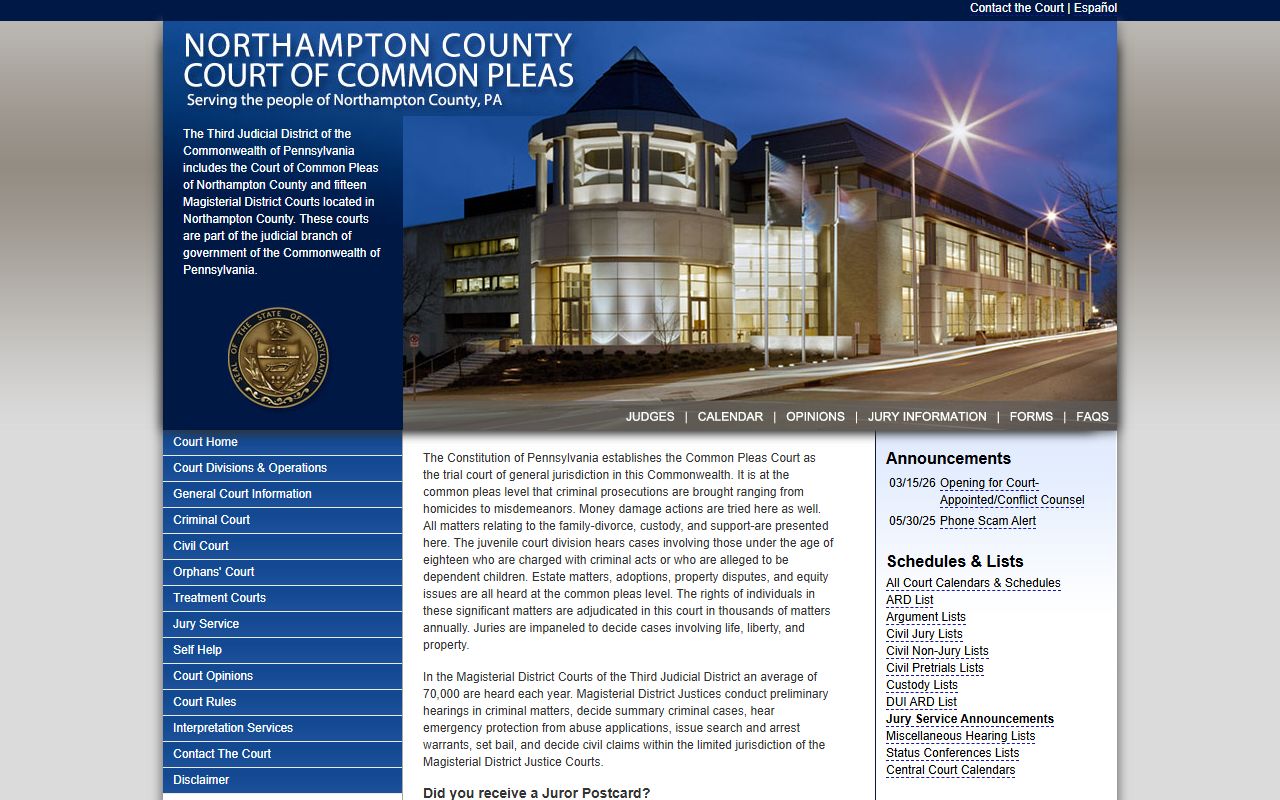
For phone inquiries, call during normal hours. The staff can tell you about the status of a warrant but may not share all case details over the phone. Some information requires an in-person visit or a formal records request.
| Office |
Northampton County Sheriff's Office 669 Washington Street Easton, PA 18042 Phone: (610) 829-6527 |
|---|---|
| Hours | Monday through Friday, 8:30 AM to 4:30 PM |
| Website | nccpa.org |
How to Check for Warrants
There are three main ways to check for warrant records in Northampton County. Each has its own strengths.
First, use the UJS Portal. The Pennsylvania Unified Judicial System Portal at ujsportal.pacourts.us lets you search court dockets from all 67 counties. Type in a name or docket number. The results show charges, hearing dates, and case status. Docket entries often note when a bench warrant has been issued. This is the fastest free option.
Second, contact the Sheriff's Office. Call (610) 829-6527 or go to 669 Washington Street in Easton. Staff can check the active warrant list for you. This gives you the most up-to-date data since the office handles warrant service directly.
Third, visit the Clerk of Courts in person. The Clerk keeps all criminal case files. You can review docket sheets and check for any warrants tied to a case. This is the best option when you need full case details beyond just the warrant status.
- Search the UJS Portal online for free
- Call the Sheriff's Office at (610) 829-6527
- Visit the Clerk of Courts at the courthouse
- Submit a Right-to-Know request for records
Northampton County Court System
The Northampton County Court of Common Pleas is the trial court of general jurisdiction. It handles all major criminal cases, civil matters, and family law issues. Judges in this court sign arrest warrants and bench warrants. The court sits at the county courthouse in Easton.
Magisterial District Justices play a key role in the warrant process. They conduct preliminary hearings to decide if enough evidence exists to move a case forward. MDJs also issue warrants for summary offenses and lower-level criminal charges. With over 70,000 MDJ cases processed each year, Northampton County has a busy lower court system. Several MDJ offices operate across the county to serve different areas.
When a case moves past the MDJ stage, it goes to the Court of Common Pleas for trial. At that point, any new warrants come from a Court of Common Pleas judge. The Clerk of Courts manages the file from that point on.
Note: Preliminary hearings are important. If a defendant fails to appear for one, the MDJ can issue a bench warrant on the spot. This is one of the most common reasons for warrants in Northampton County.
Warrant Record Details
A warrant record in Northampton County includes the core facts of the case. The document names the person, lists the charges or reason for the warrant, and states which judge issued it. The date and case number are also part of the record.
Bench warrant records show why the warrant was issued. Most often, it is a failure to appear for a scheduled hearing. The record will note the missed court date and the next steps set by the judge. Some bench warrants include a bail amount. Others require the person to be held until a hearing takes place.
Arrest warrants contain more detail about the alleged crime. The affidavit of probable cause is attached. It lays out the facts that led the judge to sign the warrant. Under Rule 513 of the Pennsylvania Rules of Criminal Procedure, the affidavit must contain enough detail to show probable cause. Rule 150 sets the standard the judge must meet before signing.
Public Access to Court Records
Warrant records in Northampton County are public in most cases. Pennsylvania supports open access to court records. Active warrants and criminal dockets are available to anyone who asks. You do not need to be a party to the case.
The Pennsylvania Office of Open Records handles disputes when a records request is denied. Court records follow rules set by the judiciary, which are separate from the Right-to-Know Law. But the result is similar. Most criminal case records are open.
Some records are sealed. Juvenile cases are not public. Cases where a judge has ordered the file sealed are also off-limits. Expunged records will not show up in any search. If you find no results for a name, it could mean there is no active warrant, or the record has been sealed or expunged.
For statewide criminal history beyond just warrants, the PATCH system at epatch.pa.gov pulls state police data. It covers arrests and convictions across all counties in Pennsylvania.
Resolving Warrants in Northampton County
If you have an active warrant in Northampton County, there are steps you can take. Turning yourself in at the Sheriff's Office is one option. You will be processed and brought before a judge. This can sometimes lead to a quicker resolution than waiting to be picked up.
A lawyer can also help. An attorney may be able to arrange a hearing to have the warrant recalled. This is common for bench warrants. The court may set new conditions, such as a new court date or updated bail terms. Contact the Northampton County Bar Association for a referral if you need legal help.
Note: Ignoring a warrant does not make it go away. Warrants stay active until they are served, recalled by a judge, or resolved through the court. Driving with an active warrant can lead to arrest during a routine traffic stop.
Nearby Counties
Northampton County is in the Lehigh Valley area of eastern Pennsylvania. Check the correct county before you search. Warrants are issued by the county where the case originated.